No Mercy Mexico Explained The True Story Behind The Viral Video
# No Mercy Mexico Explained: The True Story Behind the Viral Video

The "No Mercy in Mexico" video stands as one of the most harrowing examples of narco-propaganda to breach mainstream social media, traumatizing millions of unwitting viewers across platforms like TikTok and Twitter. Documenting the final moments of a father and son at the hands of a cartel, the footage transcends mere shock value to reveal the deep-seated humanitarian crisis and unchecked violence plaguing specific regions of Mexico. This article examines the factual context behind the clip, the sociological implications of such brutality, and the mechanics of how digital platforms inadvertently amplify psychological warfare.
### The Anatomy of a Viral Tragedy
In the digital age, the line between distant geopolitical conflicts and the screens of everyday users has blurred, but few incidents have highlighted this erosion of boundaries as starkly as the "No Mercy in Mexico" video. The footage, which began circulating widely in early 2018 before resurfacing with viral intensity on TikTok in recent years, depicts the interrogation and subsequent execution of two men. They are identified as a father and his son, reportedly caught in the crossfire of Mexico’s brutal drug war.
Unlike fictional horror, the terror in the video is palpable and real. The father is subjected to extreme violence first, a tactic often employed by cartels to inflict maximum psychological trauma on the remaining survivors—in this case, his son. The video is not merely a recording of a murder; it is a calculated piece of "narco-marketing," designed to instill fear in rival gangs, uncooperative authorities, and the local populace. The raw nature of the content shocked the internet, leading to a phenomenon where users would trick others into watching it, unknowingly spreading cartel propaganda.
### Contextualizing the Violence: Who, Where, and Why?
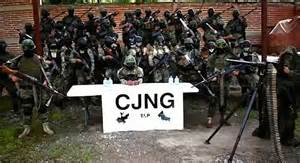
To understand **No Mercy Mexico Explained: The True Story Behind the Viral Video**, one must look at the geopolitical landscape of the region where it was filmed. While definitive forensic details are often obscured in these cases, investigative journalists and internet sleuths have traced the origin of the clip to the chaotic turf wars involving the Jalisco New Generation Cartel (CJNG) and local splinter groups such as Los Viagras or the Santa Rosa de Lima Cartel. These groups are engaged in a perpetual battle for control over drug trafficking routes, synthetic opioid production, and extortion rackets.
The victims in the video were alleged by the perpetrators to be informants or members of a rival faction, though these claims are frequently used by cartels to justify the murder of innocents or low-level players. In the grim logic of the cartel underworld, the public execution of a father and son serves a specific strategic purpose. It signals that families are not off-limits and that the cost of opposition is total annihilation.
Security analysts have noted that the production of such videos has become a standard operating procedure for organizations like the CJNG. "The cartels have evolved into paramilitary organizations that understand the power of media," explains Dr. Carlos Mendoza, a researcher specializing in Latin American security. "They use video platforms not just to document their crimes, but to broadcast their dominance. The cruelty is the point; it is a message sent in blood."
### The Psychology of Narco-Propaganda
The "No Mercy in Mexico" video is a prime example of psychological warfare. By recording the torture and execution, the perpetrators are stripping the victims of their humanity and asserting absolute power over life and death. This is a tactic known as "plata o plomo" (silver or lead) taken to its most extreme conclusion. The video serves as a digital billboard warning that the state cannot protect citizens, and that the cartel's reach is inescapable.
Furthermore, the video highlights the disturbing trend of "snuff" content moving from the dark web to surface web platforms. The video’s resurgence on TikTok, often hidden behind innocuous thumbnails or spliced into other videos, exposed a younger demographic to graphic violence. This phenomenon creates a cycle of desensitization. When violence becomes content, the reality of the human suffering involved is often lost on the viewer, who may view it through the detached lens of a smartphone screen.
Psychologists warn of the "vicarious trauma" experienced by those who stumble upon such content. For the families of the victims, the viral nature of the video adds a layer of perpetual torment, as the documentation of their loved ones' deaths becomes a permanent fixture of the internet archives.
### Digital Safety and the Failure of Moderation
The spread of the **No Mercy Mexico** video raises critical questions about content moderation on major social media platforms. Despite strict policies against gore and violent extremism, the sheer volume of uploads allows videos like this to slip through the cracks. Algorithms designed to maximize engagement often inadvertently promote shocking content because it generates strong reactions—comments, shares, and watch time.
This incident forced platforms like TikTok to re-evaluate their hashing technologies, which are supposed to identify and block known violent files. However, users often bypass these filters by altering the video’s speed, cropping the frame, or overlaying music. This cat-and-mouse game between moderators and uploaders ensures that while the original file may be deleted, echoes of the footage remain.
Parents and digital literacy advocates have used the "No Mercy in Mexico" trend as a case study for online safety. It serves as a grim reminder that the internet is not a sanitized space and that real-world violence can intrude into digital spaces without warning.
### The Human Cost of the Drug War
Beyond the pixels and the shock value lies a devastating reality for the people of Mexico. The father and son in the video were not just characters in a viral clip; they were human beings with lives, aspirations, and families who mourn them. Their deaths are part of a staggering statistic: over 350,000 homicides have been registered in Mexico since the government launched a militarized offensive against drug cartels in 2006.
The video is a microcosm of the impunity that defines the conflict. In many regions, the line between the police and the cartels is nonexistent, leaving citizens with no recourse. The "No Mercy" title given to the video by internet users is tragically apt; it reflects an environment where mercy is viewed as a weakness and brutality is the currency of power.
As the world consumes this content, it is imperative to remember the sociological roots of the violence. It is fueled by international demand for narcotics, the flow of illegal firearms across borders, and systemic corruption. The viral video is merely a symptom of a much larger, festering wound.
### Conclusion: A Warning for the Digital Age
The "No Mercy in Mexico" video remains a dark chapter in internet history, serving as a testament to the cruelty of cartel warfare and the dangers of unrestricted digital access. It challenges viewers to look beyond the shock factor and acknowledge the human tragedy occurring south of the border. While the video itself should be avoided out of respect for the victims and for one's own mental well-being, understanding the story behind it is crucial for grasping the severity of the Mexican Drug War. It stands as a somber reminder that behind every viral piece of gore, there are real victims, grieving families, and a society held hostage by violence.